As New York City reels from riots and political tension, a cable host now says its mayor smiles through the chaos while the media looks away.
Story Snapshot
- Greg Kelly accuses Mayor Zohran Mamdani of downplaying riots and laughing off burning buses while cheering a Knicks win.
- Kelly’s harsh attacks fit a wider pattern of sharp, legally protected political speech and media distrust on both left and right.
- Mamdani, a democratic socialist and New York City’s first Muslim mayor, faces both praise and fierce criticism over crime and protests.
- Conflicting clips show him both condemning terrorism and being accused of going soft on riots, feeding public confusion.
Greg Kelly’s charge: a mayor smiling while the city burns
News host Greg Kelly has built a running case that New York City Mayor Zohran Mamdani is not just wrong on policy, but dangerous and dishonest. On his Newsmax program, Kelly has called Mamdani a “socialist” and an “outright communist” whose “crazy” ideas make him “worthless” and “unfit” to lead the city, language meant to signal that basic safety and order are at risk under this mayor.[1] Kelly claims a recent night of buses on fire and street violence showed that risk in real time.
Kelly says that “this past Saturday” the city saw serious unrest, including school buses torched after a Knicks win, and argues Mamdani responded by “laughing it off” and celebrating the team instead of speaking for victims and property owners.[11] Kelly points to the mayor’s upbeat comments about the New York Police Department after that night as proof that City Hall is more worried about optics than fixing what many New Yorkers see every day on their block.[16] However, Kelly has not offered specific dates or official reports to pin down the exact incidents he describes.[1]
What Mamdani and his critics say about safety, riots, and bias
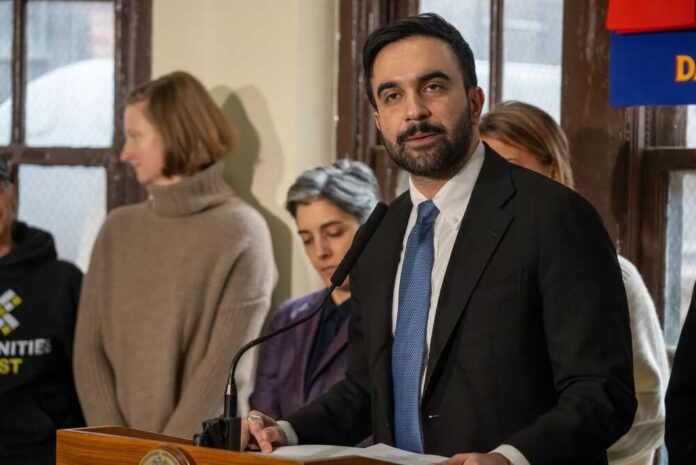
Mayor Mamdani presents a very different picture when he speaks directly. After improvised explosive devices were thrown during a protest, he confirmed that police and the Federal Bureau of Investigation (FBI) were treating it as “ISIS-inspired terrorism” and said the named suspects would be prosecuted in federal court, stressing that the devices were real bombs that could have killed people.[13] In another clip after Knicks-related violence, Mamdani commended the New York Police Department for “handling themselves appropriately” while acknowledging the clashes that frightened many residents.[16]
Yet other critics, not just Kelly, argue Mamdani still sends the wrong signal. One local opponent described a neighborhood incident as the “Mamdani Effect,” claiming the mayor has “repeatedly refused to condemn lawlessness and riots” while planning to dismantle the police anti-riot unit.[15] A Washington Free Beacon report on the Knicks victory chaos described “torching school buses” and attacks on police, and charged that Mamdani’s broader approach tries to dull public anger at criminals and redirect it toward “prosperity” and the system itself.[11] These dueling stories leave many regular New Yorkers unsure whether their leaders are on their side or playing politics.
Media wars, identity politics, and why people feel gaslit
Kelly does not just attack Mamdani’s policies. He also claims the press protects the mayor because he is a person of color and a Muslim, and says journalists act like children when they cover him.[1] That charge hits a nerve because people on both the right and left already believe the media serves the powerful, not the public. Yet Kelly has not backed this bias claim with specific articles, named reporters, or hard data comparing coverage of Mamdani to other mayors, so it remains an assertion rather than a proven fact.[1]
This kind of clash is not unique to New York City. A 2025 analysis from the Knight Columbia Center on Media and Democracy found that in most high-profile fights involving progressive politicians of color or Muslim faith, pundits often use words like “maniac,” “con artist,” or “un-American” and accuse the media of protecting them because of identity.[1] Defamation scholars note that Supreme Court rulings make it very hard for public figures to win lawsuits over harsh political criticism, which encourages “sharp attacks” and scandal-driven coverage instead of careful debate on policy.[19] That legal shield helps explain why voices across the spectrum, from Fox News to far-left influencers, push the line on rhetoric while ordinary citizens feel stuck in the middle.
A deeper crisis: safety fears, protest politics, and a system people do not trust
Behind the Kelly–Mamdani fight sit fears that feel familiar in 2026. Long-time New Yorkers have watched crime cycles, riots, and “defund the police” battles come and go. When Mamdani previously backed efforts to cut police funding during the 2020 unrest,[18] many law-and-order voters concluded that leaders cared more about ideology than about shop owners whose windows were smashed or families stuck inside burning neighborhoods. Those memories make it easier for them to believe Kelly when he says the mayor shrugs at buses on fire, even when some facts are fuzzy.
At the same time, Mamdani’s supporters see a mayor trying to balance protest rights, civil rights, and safety in a tense city. He has pushed to change how 911 calls are handled so that some mental health crises do not default to armed police,[17] and he has promised to rethink heavy-handed protest units.[14] Many liberals and some younger conservatives believe the old model failed too, with aggressive policing, ignored hate crimes, and elite politicians more focused on donors than neighborhoods. That overlapping anger at “the system” is why both sides can watch the same clip and walk away certain they are being lied to.
What remains unclear—and what to watch next
Key facts in this story are still not nailed down. Kelly has not provided time-stamped evidence tying specific bus fires and riots to a single Saturday, and no public records in the material here confirm his timeline.[1] Social media clips are often edited, so a smiling press moment may not reflect everything Mamdani said about violence that night. On the other hand, critics raising alarms about crime and disorder in New York City are not imagining the damage, which has been documented after major events like the Knicks win.[11]
For citizens who feel both parties and the media have failed them, this fight is another warning sign. A mayor with ambitious plans and a cable host with a big microphone are trading sharp labels instead of doing the hard work in public: showing receipts, naming dates, and explaining how policies will protect both safety and freedom. Until leaders, journalists, and critics are forced to ground their claims in clear facts instead of chopped-up clips, many Americans will keep believing that the real winners are the same small group of elites, and that regular people in places like Queens and Brooklyn are left to live with the fires either way.
Sources:
[1] YouTube – Greg Kelly: NYC is on fire and Mamdani ‘laughs it off and cheers for …
[11] Web – Greg Kelly calls out Curtis Sliwa for his appearance at …
[13] YouTube – NYC Mayor Zohran Mamdani Faces Protests Over Antisemitism …
[14] YouTube – Full Zohran Mamdani press conference on explosive devices thrown …
[15] Web – To police massive NYC protests, Mamdani looks to the Midwest
[16] Web – This was last night in Middle Village — the ‘Mamdani Effect’ on full …
[17] Web – Soon after Saturday’s win, rowdy fans were clashing with police …
[18] Web – After Vowing to Overhaul 911 Response, Mamdani Takes Cautious …
[19] Web – When NYC was on fire during the 2020 riots, Cuomo … – Instagram