

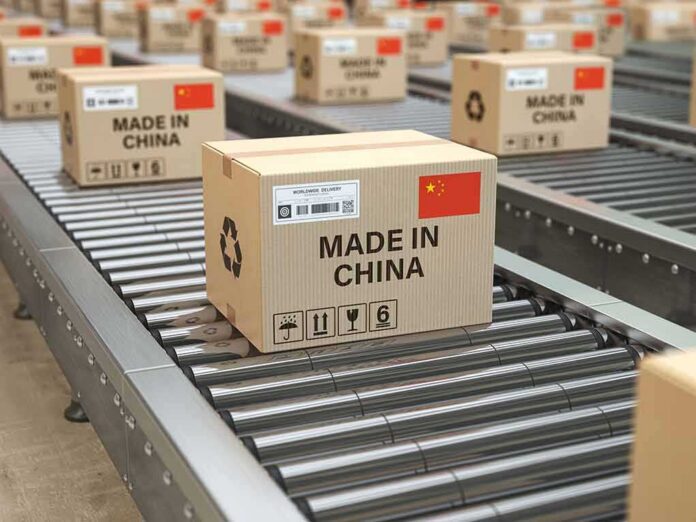
Export controls don’t fail only at the border; they fail in the shadows between jurisdictions, where demand for scarce compute meets opaque intermediaries. The Megaspeed-Nvidia controversy is a case study in that gray market—where a lawful invoice in Singapore can still end with advanced U.S. chips powering AI clusters in prohibited destinations.
At a Glance
- U.S. Commerce and Justice launched an investigation into Singapore-based Megaspeed in 2024 after detecting suspicious semiconductor diversion patterns.
- Investigators sought clarity on direct and indirect Nvidia sales and interviewed a former Megaspeed executive; the probe remains active.
- Megaspeed and Nvidia both say internal checks have found no evidence of illicit diversion; Megaspeed cites third-party inspections and a law-firm-led GPU census.
- The dispute exemplifies modern export-control evasion: third-country transshipment, layered ownership, and remote-access workarounds that complicate enforcement.
What the government is actually investigating
The core fact is unambiguous: U.S. authorities opened an export-control investigation into Megaspeed in 2024 after “proactive monitoring” flagged potential diversion of sensitive semiconductors. That joint Commerce–Justice statement is the anchor of what is known; it is not rumor or inference. The agencies made the probe public and described steps such as seeking records regarding Nvidia’s direct and indirect sales to the Singapore firm. That matters because BIS, the Bureau of Industry and Security, rarely goes public on live cases unless it sees national-security stakes or wants to signal industry-wide compliance expectations. Public confirmation is itself a compliance nudge: the government expects distributors and hyperscalers to audit their downstream channels.
Investigators also conducted an in-person interview with a former Megaspeed executive as part of the inquiry, a conventional but telling step: it indicates the case is beyond a desk review and into fact development. None of that establishes a completed violation or confirms specific end-users, but it fixes the frame: authorities believe the risk is credible enough to expend resources, request records, and interview principals.
Megaspeed’s and Nvidia’s defense, and how to weigh it
Megaspeed has mounted a comprehensive defense. The company says on-site inspections by BIS and other authorities found no evidence of illicit transfers. It has retained a major U.S. law firm to conduct a “GPU census” and verify adherence to export rules. Nvidia, for its part, has indicated its internal review found no diversion and that Megaspeed is owned and operated outside mainland China, with no Chinese shareholders. These claims address two distinct questions: ownership/control risk and physical or functional diversion risk. The absence of Chinese shareholders can reduce—but not eliminate—exposure to pressure or covert influence. A clean inspection snapshot can be meaningful, but inspections are necessarily time-bound and can be gamed if inventory is fluid across facilities.
An expert read treats these defenses as relevant but not dispositive. Export control cases often turn on chain-of-custody over months, not days, and on functional access—who can use the compute—rather than narrow physical possession at an instant. A law-firm-led census is prudent governance; it is not equivalent to subpoena-backed tracing or cross-border mutual legal assistance that can map transshipment in depth. In short: the defenses reduce the probability of wrongdoing as described in headlines, but they do not logically preclude diversion through layered intermediaries or remote-use arrangements if those existed.
How diversion actually happens in the AI era
Semiconductor export controls once hinged on shipping crates and serial numbers. Today, the evasion surface is bigger. Three vectors recur in enforcement histories. First, transshipment: a permissible buyer in a third country acquires controlled items, relabels or re-exports them, and misdeclares the true destination; BIS has documented such patterns repeatedly and makes clear that routing through another jurisdiction does not lift Export Administration Regulations (EAR) obligations. Second, layered intermediaries: multi-jurisdiction corporate networks that fragment custody and paperwork, frustrating end-use checks. Third, remote access: compute is hosted legally abroad, but prohibited end-users obtain time-sliced access to GPU clusters, effectively importing capability without crossing a customs line—an issue BIS and interagency partners have begun to address in guidance and rulemakings.
These mechanics matter because they explain why an open investigation is credible absent a publicly proven violation. They also explain why companies’ “no evidence found” statements, while not trivial, are not conclusive; diversion may occur at a different corporate node or as functional access rather than asset movement. The burden in this domain is end-to-end controls: knowing customers, monitoring usage patterns, and designing contracts and telemetry to make silent re-export or unauthorized tenancy hard.
What the public record supports—and what it doesn’t
What is supported: U.S. authorities detected suspicious patterns consistent with sensitive chip diversion and escalated to a formal investigation; agencies pursued records and interviews; the probe remains active. Multiple reputable outlets have reported the government’s confirmation of those facts. What is not established in the public domain: a definitive map showing specific Nvidia units arriving at particular Chinese military-linked end-users, or a completed adjudication imposing penalties on Megaspeed. The absence of public charges is not exculpatory; equally, an investigation is not a conviction. A careful reader should separate the gravity of the risk from the certainty of any single allegation’s most dramatic version.
This is not fence-sitting; it is the posture export-control professionals adopt every week. Enforcement histories are full of cases that looked amorphous at first and later produced specific charges—and others that produced compliance agreements without fines when facts fell short. The Megaspeed matter sits in that liminal space right now, with government attention on one side and company audits and denials on the other.
According to CNBC, Democrats are scrutinizing the business of Commerce Secretary Howard Lutnick’s adult sons as they investigate why the top Trump administration official allegedly resisted cracking down on companies suspected of diverting Nvidia’s advanced AI chips to China.…
— Spotlight on China (@spotlightoncn) November 19, 2026
Why this case resonates beyond one company
Three broader stakes are in play. First, precedent: if authorities ultimately show that third-country intermediaries enabled high-end AI chips to reach prohibited users, expect tighter rules on both physical exports and remote access, including stricter reseller vetting, telemetry mandates, and contractually enforceable controls on data center tenancy. BIS has been signaling precisely this tightening in policy statements and enforcement summaries: transshipment is still an export under the EAR, and functional access can trigger the same controls as physical delivery. Second, market structure: as controls tighten, demand will chase supply through ever more baroque channels, raising compliance costs for cloud providers, integrators, and logistics actors in Southeast Asia and the Gulf. Third, allied coordination: divergence among jurisdictions creates arbitrage; convergence closes loopholes. This case will inform how Singapore, Malaysia, and others calibrate their own enforcement to align with U.S. expectations.
Practical lessons for compliance leaders
Several practices rise to the top. Traceability must go beyond shipment logs to active telemetry: attestations of end use are necessary but insufficient. Contract for audit rights down-chain, log GPU allocation and tenancy, and monitor for red flags such as rapid hardware churn, unexplained inventory deltas, and remote sessions from restricted networks. Treat third-country hosting as a controlled export if prohibited persons can obtain compute—even indirectly—through brokers. Finally, rehearse your incident playbook: if a regulator calls, you need contemporaneous records, not reconstructed spreadsheets. Firms that invested early in this stack have fared better when BIS comes knocking; those that relied on point-in-time inspections have not.
Bottom line
The Megaspeed probe is not a media morality tale; it is the latest test of whether export controls can keep pace with a cloudified, brokered, transshipped compute market. The government’s case rests on credible indicators and an active investigation. The company’s rebuttal is structured and nontrivial but does not, on its own, close every avenue of diversion. The resolution—whatever it is—will reverberate through how advanced AI capability is governed globally. The smart money treats this as a compliance design problem first, a headline second.
Sources:
mediaite.com, justice.gov, politico.com, yahoo.com, edition.cnn.com, thehill.com, cnn.com