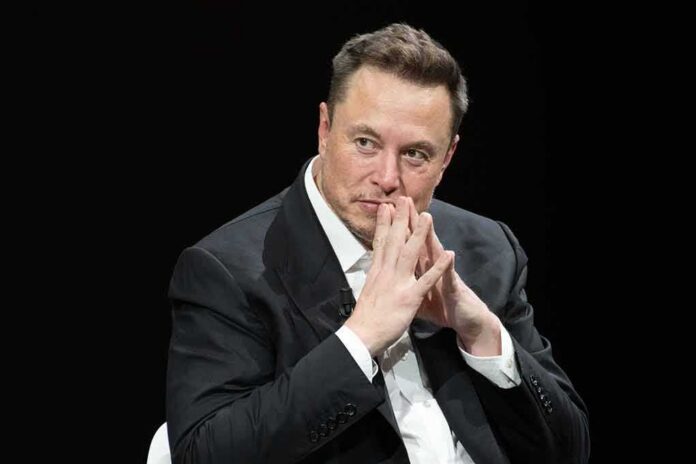
The real argument is not whether Elon Musk “owes” South Africa a check; it is whether a society that once rationed opportunity by race can credibly invite its most famous émigré to help repair the damage—and how to do that without collapsing into symbolism, grievance, or regulatory horse-trading.
At a Glance
- President Cyril Ramaphosa publicly urged Elon Musk to “remember his country” and contribute to South Africa’s development, anchoring the appeal in apartheid-era education disparities rather than mere patriotism.
- The historical record is unequivocal on unequal school funding under apartheid; translating that system-level privilege into a personal obligation is normative, not legal, and requires specificity to be persuasive.
- Musk rejected the framing and attacked contemporary transformation policy as discriminatory, tying his stance to ownership rules and “apartheid 2.0” claims.
- The strongest path from moral appeal to practical impact is a transparent, auditable proposal—focused on schools and digital access—kept separate from licensing or market-access disputes.
What Ramaphosa actually argued—and why it resonated
In a public interview during a Silicon Valley visit, President Cyril Ramaphosa said he wanted to “chat” with Elon Musk about remembering South Africa, urging him to give back to the country where he was born and educated. He did not leave the ask at sentiment. He tied it to a concrete mechanism: under apartheid, the state spent substantially more on white learners than on Black learners, a fiscal design meant to entrench racial hierarchy. He cast Musk’s formative schooling within that structure, then framed the request as a contribution to national development, not as a personal payment or political tribute.
That line of argument is powerful because it links biography to policy architecture. Musk was born in Pretoria in 1971 and attended South African schools before emigrating at 17; those are uncontested facts that place his early education within a system built on resource disparity. Even without pinning down the exact rand-per-learner ratio for his specific schools, the broader literature records double-digit funding gaps at apartheid’s peak and significant, persistent differentials well into the transition years. Put plainly: the state heavily subsidized white educational trajectories, and that subsidy altered life chances at scale.
What Musk rejected—and what he substituted in its place
Musk responded by condemning contemporary South Africa as “super racist against Whites and Asians,” later gesturing to “100+” allegedly racist laws and calling the current order “Apartheid version 2”. He and his defenders have tied these claims to South Africa’s transformation framework, including ownership and licensing requirements that set thresholds for historically disadvantaged groups in regulated sectors; telecommunications rules are often cited at 30 percent equity. In effect, Musk declined the historical-moral appeal and reframed the conversation as a present-tense discrimination dispute.
As evidence, his case is thinner than Ramaphosa’s. A single-line X post and broad legal counts—unaccompanied by cited statutes, case law, or regulatory determinations—do not carry the same weight as the documentary record on apartheid-era funding or the government’s on-record invitation. Nevertheless, the critique resonates with audiences already skeptical of race-conscious policy and with entrepreneurs allergic to equity thresholds. It also entangles the philanthropy question with a live commercial issue: Starlink’s inability to secure licenses under current rules. That coupling makes any talk of “giving back” look, to critics, like leverage for regulatory concessions, even if the two tracks are separated on paper.
The history is settled; the obligation is not
The strongest part of Ramaphosa’s case is historical. Multiple academic and policy sources document that apartheid’s design lavished resources on white schools while depriving Black schools; by 1994, differentials had narrowed but remained material, and quality gaps endured. That backdrop explains why calls for restitution or contribution recur whenever a prominent beneficiary of the old order prospers abroad. Yet transforming that system-level fact into a specific personal duty is a normative step. There is no statute tying a named individual’s net worth to a ledger of past per-learner outlays, and appeals to patriotism or gratitude rarely persuade by themselves.
Credibility turns on specificity. Ramaphosa’s shorthand—“12 rand for him, 1 rand for me”—is rhetorically effective but methodologically imprecise. Stronger, sourced comparisons exist across years and learner groups; using those, and publishing the underlying series and method, would strengthen the argument while avoiding the trap of debating a single ratio rather than the well-documented structure of inequality.
Mechanism matters: from moral appeal to program design
If the goal is material benefit for South African learners, the most defensible pathway is a programmatic, auditable proposal kept cleanly separate from market-access questions. The core ingredients are straightforward:
– Targets and scope. Identify a finite set of rural and township schools for foundational learning, connectivity, and teacher support; prioritize places where marginal dollars produce the largest learning gains.
– Governance and auditing. Place funds in a ring-fenced vehicle with independent trustees, quarterly public reporting, and big-four audits; publish procurement and delivery milestones in open data.
– Delivery stack. Combine last-mile connectivity, device access, local-language content, teacher coaching, and maintenance budgets; measure reading and numeracy outcomes, not just inputs.
– Duration and off-ramps. Five- to seven-year commitments with staged tranches tied to performance; sunset clauses if targets are not met or governance fails.
Such a structure gives a donor—Musk or any peer—a high-integrity channel to fund durable public goods while insulating the gift from political churn. It also gives government and civil society metrics that outlive a single news cycle.
Keeping philanthropy distinct from regulation
The optics problem is obvious: when a head of state seeking tech investment also enforces equity thresholds that complicate a donor’s commercial entry, cynics will see quid pro quo. The antidote is structural separation. Licenses should be adjudicated under written law and published criteria; if policymakers want to adjust rules—say, to allow alternative compliance pathways for satellite constellations—they should do so via transparent notices and reasoned decisions, not private understandings. Philanthropy should proceed (or not) regardless of licensing outcomes. When the lanes are kept distinct, both can be judged on their merits.
What a fair reckoning looks like
Three truths can coexist without contradiction. First, apartheid engineered unequal educational opportunity; that history is not in dispute. Second, asking globally successful emigrants to invest where they began is legitimate—but the ask must be specific, accountable, and purged of patronage risk. Third, present-day transformation policy is a proper subject for democratic debate on effectiveness, costs, and unintended consequences; labeling it “apartheid 2.0” is rhetoric, not evidence, and it does not erase the obligations of good governance to license fairly and to attract innovation within the rule of law.
For Ramaphosa, the highest ground is to publish a concrete schools-and-connectivity plan with independent oversight and invite an answer in writing. For Musk, the strongest response—if he wishes to separate philanthropy from politics—is to support outcome-based education initiatives while continuing to litigate or lobby regulatory questions in the open. Either path beats trading barbs about who “owes” whom. The country’s children do not care about that argument; they care about bandwidth, teachers, and books.
🇿🇦 CYRIL RAMAPHOSA URGES ELON MUSK NOT TO FORGET HIS SOUTH AFRICAN ROOTS!
South African President Cyril Ramaphosa wants to remind Elon Musk of the importance of remaining connected to his country of origin, even after acquiring citizenship in another country.
During an… pic.twitter.com/9A6KHxFBgy
— Alfredo B (JEUNE FORT) (@iamalfredob) November 18, 2026
Sources:
twitchy.com, sanews.gov.za, news24.com, briefly.co.za, itweb.co.za, thesun.ng, starlink.com, eric.ed.gov, education.gov.za, academic.oup.com