

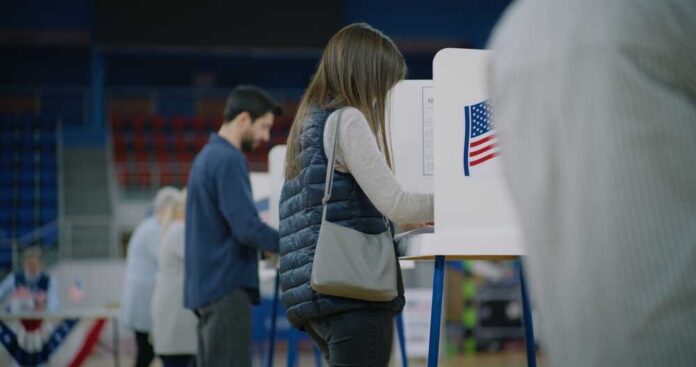
A Minnesota hearing exchange is being touted as proof that citizenship checks can fall through the cracks—exactly the kind of election-system loophole Americans thought should have been closed years ago.
Quick Take
- A Townhall report says Minnesota’s Director of Elections, Paul Linnell, acknowledged that a driver’s license at the polls affirms identity, not citizenship eligibility, during a legislative hearing.
- Rep. Patti Anderson (R) pressed Linnell on what happens when voter registrations are flagged for Social Security number mismatches—an issue conservatives view as an obvious risk point.
- Minnesota law still requires voters to affirm U.S. citizenship when registering, and non-citizen voting remains illegal under state statute.
- Separate reporting and state materials indicate Minnesota implemented new 2026 absentee-ballot request rules requiring dual verification (ID number plus last four of SSN), a tightening that cuts against claims of “anything goes.”
What the hearing dispute actually centers on
Townhall’s March 15, 2026 story hinges on a legislative hearing moment in which Minnesota Director of Elections Paul Linnell described a driver’s license as an “affirmation of identity” rather than an “affirmation of eligibility.” Rep. Patti Anderson, a Republican, questioned Linnell about cases where registrations are flagged for mismatched Social Security information and whether those voters could still cast ballots if no one challenges them. The article portrays Linnell’s answers as effectively conceding a vulnerability.
The limitation is that the “admission” framing depends heavily on interpretation. The research provided does not include a full transcript or hearing video, and no independent source is cited as confirming the exact wording and context. That matters, because election administration often separates identity verification at the polling place from eligibility verification during registration. Without the full record, the strongest verified takeaway is narrower: the dispute is about process design and enforcement points, not a documented wave of illegal voting.
What Minnesota law says—and what it doesn’t
Minnesota allows residents to obtain driver’s licenses regardless of citizenship status, but voter registration requires an affirmation of U.S. citizenship under penalty of perjury. State law also prohibits non-citizen voting. Those two facts can be true at the same time: licenses can confirm who someone is, while citizenship is supposed to be confirmed through the registration oath and related checks. Conservatives see a red flag when those checks produce “mismatches” yet the system can still permit a ballot unless challenged.
The key policy question is whether the state’s controls reliably stop ineligible registrations before Election Day and whether they trigger meaningful follow-up when records are flagged. Townhall claims that reports or documentation about questionable votes are generated only if votes are contested or challenged, implying a reactive posture. The research also shows Minnesota election officials emphasize legal constraints and administrative systems, but it does not provide a public, step-by-step accounting of how every mismatch is resolved across counties.
2026 rule changes tighten absentee verification
Separate local reporting indicates Minnesota enacted new laws affecting voting in 2026, including changes to absentee voting requests. After heavy absentee participation in 2024 and complaints about confusion, the updated approach requires dual verification for absentee-ballot requests: a driver’s license or state ID number plus the last four digits of a Social Security number. Secretary of State Steve Simon described the change as improving security while avoiding unnecessary obstacles for eligible voters.
That tightening is important context when weighing the “loophole” narrative. If Minnesota’s absentee process now requires two data points, the system is not static—and at least on paper it is moving toward more robust verification where ballot requests are initiated. This does not resolve concerns about in-person voting identity versus eligibility checks, but it undercuts the idea that state officials are indifferent to verification. The remaining debate is whether reforms are sufficient and consistently enforced statewide.
Transparency fights complicate public trust
Public trust also depends on transparency, and Minnesota has seen conflict over election-related data access. In 2025, the Secretary of State’s office demanded the removal of voter data that had been published online by Minnesota Election Integrity Solutions, describing the exposure as potentially unlawful. To many conservatives, aggressive posture against outside oversight can look like bureaucracy protecting itself. To election administrators, publishing sensitive data can raise privacy and security risks and potentially violate statutes.
Minnesota Elections Official Finally Admits What We All Knew About Illegals Voting https://t.co/A7bwfhfbAI
— TheRightSnark (@JinxOfWV) March 16, 2026
The net result is an atmosphere where both sides talk past each other: critics focus on eligibility vulnerabilities and flag-handling, while officials emphasize legal oaths, privacy limits, and incremental process upgrades. Based on the provided research, there is no verified evidence of widespread non-citizen voting in Minnesota, but there is documented political conflict over how to prove, audit, and communicate election integrity. That is exactly why clear records—transcripts, procedures, and audit outcomes—matter.
Sources:
Minnesota Elections Official Finally Admits What We All Knew About Illegals Voting
Office of the Minnesota Secretary of State Demands Removal of Voter Data from Public Website
New 2026 Laws Impact Voting, Business Fraud in Minnesota
New Legislation to Protect Election Workers Takes Effect June 15
Trump Administration Demands Minnesotans’ Private Voter Data to Call Off His Secret Police